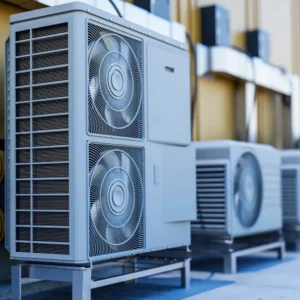
 Air conditioning plays a crucial role in employee well-being, especially in office environments where productivity depends heavily on thermal comfort, air quality, and noise levels. A poorly maintained or poorly adjusted system can cause fatigue, discomfort, irritation, and even tension between colleagues. On the other hand, a modern and efficient air-conditioning system creates a healthier, more pleasant, and more motivating workplace.
Here are the key ways to optimize your office air conditioning to ensure maximum comfort for employees.
1) Maintain a stable and appropriate temperature
The ideal temperature in an office generally ranges between 22°C and 24°C in summer, and around 20°C to 21°C in winter when using reversible systems.
Why stability matters:
-
Too low a temperature causes chills, discomfort, and difficulty concentrating.
-
Too high a temperature leads to fatigue and increases the risk of drowsiness.
-
Sudden temperature variations create thermal stress for the body.
Best practices:
-
Install a programmable thermostat.
-
Avoid extreme settings (not below 22°C in summer).
-
Adapt temperature based on occupancy levels.
2) Improve indoor air quality
Air that is too dry, too humid, or poorly filtered can cause irritation, allergies, or overall discomfort.
How to improve air quality:
-
Clean or replace filters regularly.
-
Use a mechanical ventilation system (VMC) in enclosed buildings.
-
Have ducts and indoor units cleaned at least once a year.
-
Maintain humidity levels between 40% and 60%.
Good air quality enhances concentration, reduces absenteeism, and improves overall health at work.
3) Reduce noise from the air-conditioning system
Noise is a major source of discomfort in offices. A loud air-conditioning system disrupts phone calls, meetings, and concentration.
Possible solutions:
-
Choose quiet indoor units (ideally under 30 dB).
-
Install the outdoor unit away from sensitive areas.
-
Regularly check fan and compressor condition.
-
Add acoustic materials in open-plan offices.
4) Avoid direct drafts
Employees seated directly under air vents often complain of headaches, stiff necks, or thermal discomfort.
How to reduce drafts:
-
Adjust the direction of air diffusers.
-
Use suitable diffusers for open-plan areas.
-
Reorganize desk placement when refurbishing the workspace.
-
Activate “soft airflow” modes available on modern systems.
5) Adapt air-conditioning settings to real office occupancy
Modern offices often have fluctuating occupancy due to remote work, flexible schedules, and team rotations.
Optimization strategies:
-
Program temperature schedules according to working hours.
-
Install presence or CO₂ sensors.
-
Use “energy-saving” mode when the office is empty.
This improves comfort while reducing energy costs.
6) Perform regular maintenance
Poorly maintained systems quickly become sources of discomfort—reduced performance, bad odors, noise, or excessive energy use.
Essential maintenance:
-
Replace filters every 3 to 6 months.
-
Carry out a full cleaning of indoor and outdoor units annually.
-
Check refrigerant levels.
-
Inspect fans and heat exchangers.
Regular maintenance ensures long-lasting comfort and extends the lifespan of the equipment.
7) Involve employees in thermal-comfort management
Comfort needs vary from person to person. Involving employees helps prevent frustration and unnecessary complaints.
Good practices:
-
Explain how the system works.
-
Set clear policies (target temperatures, schedules, usage rules).
-
Allow employees to report issues easily.
-
Train facility managers to adjust settings properly.
Open communication makes it easier to accept shared temperature settings.
The Latest Technologies in Smart Air Conditioning
Smart air conditioning has rapidly evolved over the past decade, driven by rising energy costs, climate concerns, and growing expectations for comfort and automation. Today’s systems are not just cooling devices—they are intelligent, connected, adaptive tools that optimize comfort, reduce energy consumption, and improve indoor air quality.
Here is an in-depth look at the latest technologies shaping the future of smart air conditioning.
1) AI-Powered Temperature Management
One of the biggest advancements in smart air conditioning is the integration of artificial intelligence (AI). Instead of simply reacting to temperature changes, AI-enabled systems learn from users’ habits and environmental factors.
What AI can do:
-
Analyze usage patterns and adjust settings automatically
-
Anticipate temperature needs based on weather forecasts
-
Optimize performance to consume less energy
-
Identify inefficiencies and suggest improvements
AI transforms air conditioning from a passive appliance into an intelligent comfort manager.
2) Smart Sensors for Real-Time Adaptation
Modern systems now include a wide ecosystem of sensors that help optimize cooling and heating in real time.
Common smart sensors:
-
Presence sensors to detect room occupancy
-
Motion sensors to direct airflow towards or away from people
-
Humidity sensors to maintain ideal indoor humidity levels
-
Air quality sensors to detect pollutants and activate filtration
-
CO₂ sensors to trigger ventilation when needed
With these sensors, the system adapts instantly to changing conditions, ensuring consistent comfort without energy waste.
3) Voice and App Control Through IoT Connectivity
The Internet of Things (IoT) has revolutionized how users interact with climate systems.
Modern smart AC systems integrate with:
-
Mobile apps
-
Smart home platforms (Google Home, Alexa, Apple HomeKit)
-
Building management systems (BMS) for offices
This allows users to:
-
Control temperature remotely
-
Create schedules and automation routines
-
Receive maintenance alerts
-
Monitor real-time energy consumption
IoT connectivity adds convenience while helping users better understand and reduce their energy use.
4) Zoning and Multi-Room Management
Zoning is one of the most effective innovations for reducing energy waste.
How it works:
-
The building is divided into zones (e.g., living room, bedrooms, office areas).
-
Each zone has independent temperature control.
-
Sensors and smart vents regulate airflow based on actual needs.
Benefits include:
-
Improved comfort, especially in multi-room homes and large offices
-
Reduced energy consumption
-
Avoiding overcooling or overheating unused areas
This technology is especially useful in buildings with variable occupancy.
5) Smart Inverter Technology for Optimal Efficiency
Inverter technology is not new, but recent generations have become smarter and more efficient.
Latest innovations:
-
Real-time modulation of compressor speed
-
Adaptive energy use based on sensor data
-
Integration with weather prediction tools
-
Reduced start-up peaks for lower electricity demand
Smart inverter systems can reduce energy consumption by 30–50% compared to traditional on/off compressors.
6) Predictive Maintenance and Self-Diagnosis
Modern air conditioners can now monitor their own health.
What predictive maintenance offers:
-
Detection of unusual performance patterns
-
Alerts for clogged filters, low refrigerant levels, or airflow issues
-
Prevention of breakdowns through early warnings
-
Longer lifespan of the system
This helps homeowners and businesses avoid unexpected failures and expensive repairs.
7) Advanced Air Filtration and Purification Technologies
Indoor air quality has become a major concern, especially in offices, hospitals, and homes with sensitive occupants.
Recent smart AC systems integrate:
-
HEPA-grade filters
-
Electrostatic purification
-
Ionizers
-
UV-C sterilization modules
-
Continuous monitoring of air pollutants
These features ensure cleaner, healthier air while maintaining thermal comfort.
8) Renewable Energy Integration
Some of the most advanced systems can connect directly to renewable energy sources.
Innovations include:
-
Solar-powered air conditioning
-
Smart integration with home energy management systems
-
Adaptive cooling based on solar production levels
-
Battery-compatible AC units
This trend supports lower carbon emissions and greater energy independence.
A well-designed and well-maintained air-conditioning system significantly improves employee comfort and productivity. By ensuring stable temperatures, better air quality, reduced noise, and limited drafts, you create a healthier, more pleasant, and more efficient work environment.
Investing in modern, well-managed air-conditioning solutions is a smart choice for both employee well-being and overall company performance. If you are looking fo some air conditionning service , check : urgence plomberie et réfrégération industrielle et commerciale .
- Address : Rue Jakob Smits 17
- City : Bruxelles
- Postal code: 1070
- Country: Belgique
Phone : +32 475 81 56 51
Email : info@technicool.be